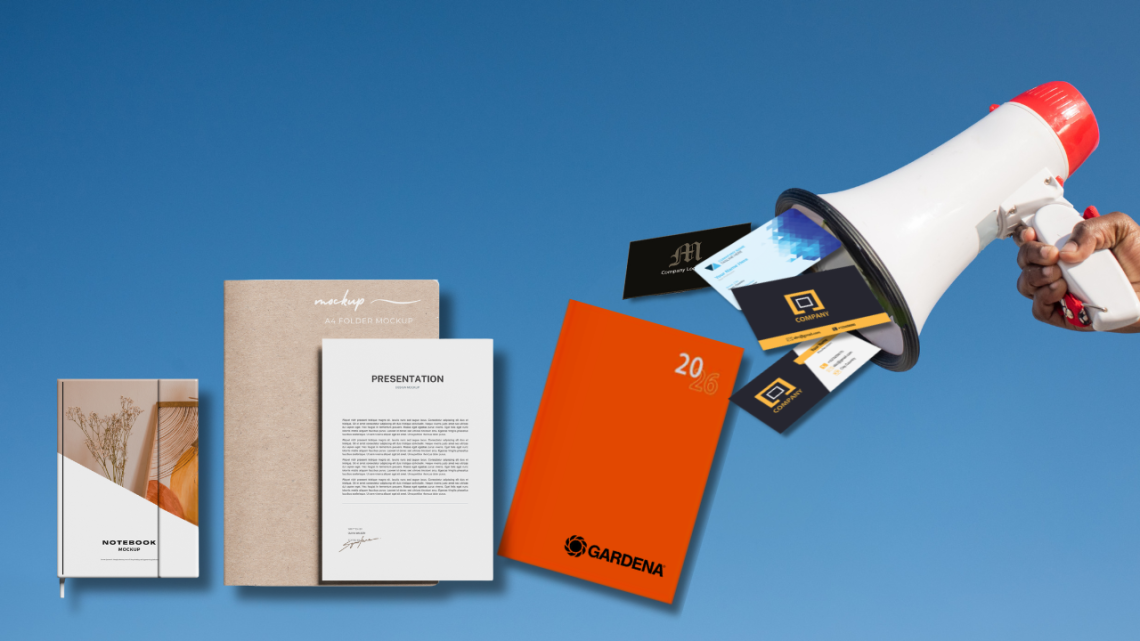
In a fast-paced corporate world where perception defines partnership potential, every detail matters. From a formal letter to a client invoice, your company’s stationery acts as an extension of your brand—communicating professionalism, consistency, and credibility.
But what exactly is corporate stationery? It’s not just branded paper—it’s a strategic branding asset that helps businesses create unified, high-impact communications. In South Africa’s modern business landscape, corporate stationery design plays a crucial role in shaping brand trust and reinforcing corporate identity, in both B2C and B2B businesses.
What Is Corporate Stationery?
Corporate stationery includes all the branded materials a business uses to communicate internally and externally—such as:
- Business cards
- Letterheads
- Envelopes
- Notepads and notebooks
- Diaries & Planners
- Presentation folders and binders
- Invoices and receipts
Each of these touchpoints contributes to a cohesive brand experience. Well-designed stationery enhances your corporate identity, instills confidence, and leaves a lasting impression on partners, clients, and investors.
Why Corporate Stationery Matters for Your Brand
1. Reinforces Brand Identity
Consistency builds credibility. Every element—from your logo placement to your color scheme—reflects your company’s professionalism. Cohesive design ensures your brand is instantly recognisable and aligned across all communications.
2. Builds Client Trust and Confidence
Branded stationery conveys stability and reliability. In business-to-business relationships, these subtle cues reinforce that your organization is established, detail-oriented, and trustworthy.
3. Enhances Communication
Corporate stationery brings structure to communication. Whether used for contracts, internal memos, or external correspondence, it ensures a uniform tone and presentation that strengthens your corporate messaging.
4. Differentiates Your Business
In industries where competition is fierce, premium-quality stationery can set your business apart. It signals that your brand values precision and quality—qualities that attract long-term partners.
Key Types of Corporate Stationery
Business Cards
Your business card is your handshake in print form, and while we may live in a digital age and ever present QR codes, we cannot neglect the importance of the tangible in a world of screens. Research conducted by Atasoy and Morewedge (2018) found that physical objects such as physical business cards, are valued more than the digital counterpart like QR codes, as the physical object was more closely tied to the self and elicited greater feelings of ownership.
For corporate clients, business cards should balance simplicity and sophistication. Focus on:
- Readable typography
- Consistent logo application
- Tactile finishes (embossing, matte lamination, or spot UV)
- haptics research shows heavier/thicker materials and certain coatings change perceptions of quality, trust, competence and memory for the brand – A. Krishna (2024)
Letterheads
A well-designed letterhead gives official communication gravitas. Consider:
- Minimalist layouts for clarity
- Premium paper for texture and weight
- Digital versions for consistent email documentation
Envelopes and Mailing Supplies
Customized envelopes transform every message into a branding opportunity. Use branded seals, foil accents, or eco-friendly materials to showcase attention to detail.
Invoices and Financial Pads
Even financial documentation can be a brand statement. Incorporate your logo, brand colors, and clean formatting to convey professionalism at every transaction.
Notepads, Notebooks, and Presentation Folders
Perfect for meetings, conferences, and client onboarding. They serve as both functional tools and marketing assets, reinforcing your corporate identity during every engagement.
Design Elements That Elevate Corporate Stationery
Many of us grew up with an understanding of digital design and web design elements and standards. These same concepts apply to print and corporate stationery, but with slight differences. Often a typography that works well in a digital format does not translate well to pront and vice versa. It can take an expert eye to guide you through these adjustments to makse sure that what you may have designed on a screen, translates well to paper.
- Logo Placement: Maintain consistent positioning across all materials.
- Color Palette: Reflect your core brand colors to ensure instant recognition.
- Typography: Choose fonts that reflect your tone—modern sans-serifs for innovation, or classic serifs for tradition.
- Material Quality: Opt for durable, eco-conscious materials that signal quality and responsibility.
- Finishes: Add subtle luxury through embossing, foil stamping, or textured coatings.
Sustainability: A Modern Corporate Imperative
Sustainable stationery has become a non-negotiable for forward-thinking brands. Using recycled paper, eco-friendly inks, and minimalist layouts not only reduces waste but communicates your company’s environmental responsibility—a growing expectation among corporate partners and investors.
Best Practices for Managing Corporate Stationery
- Develop a Brand Style Guide for digital and print assetts
Document specifications for logo usage, colors, fonts, and spacing to ensure consistency. - Review Designs Regularly
Update stationery every 2–3 years to reflect brand evolution and modern trends. - Choose Reliable Printing Partners
Partner with trusted B2B printers who understand color calibration, paper quality, and bulk supply efficiency. - Digitise Where Possible
Implement branded email signatures, digital letterheads, and editable templates for hybrid communication. - Maintain Internal Alignment
Ensure marketing, operations, and procurement teams follow unified branding standards.
Corporate Stationery as a Strategic Business Asset
Corporate stationery is far more than a design exercise—it’s a business strategy in physical form. Every document, letter, or card becomes a reflection of your company’s standards and values. For B2B and B2C organisations across South Africa, investing in professional stationery design and production enhances trust, amplifies recognition, and contributes directly to brand equity.
Partner with a company like FMIA who have been helping clients benefit from the appropriate use of corporate stationery for over 43 years to make sure that your brand represents your organisation accurately.