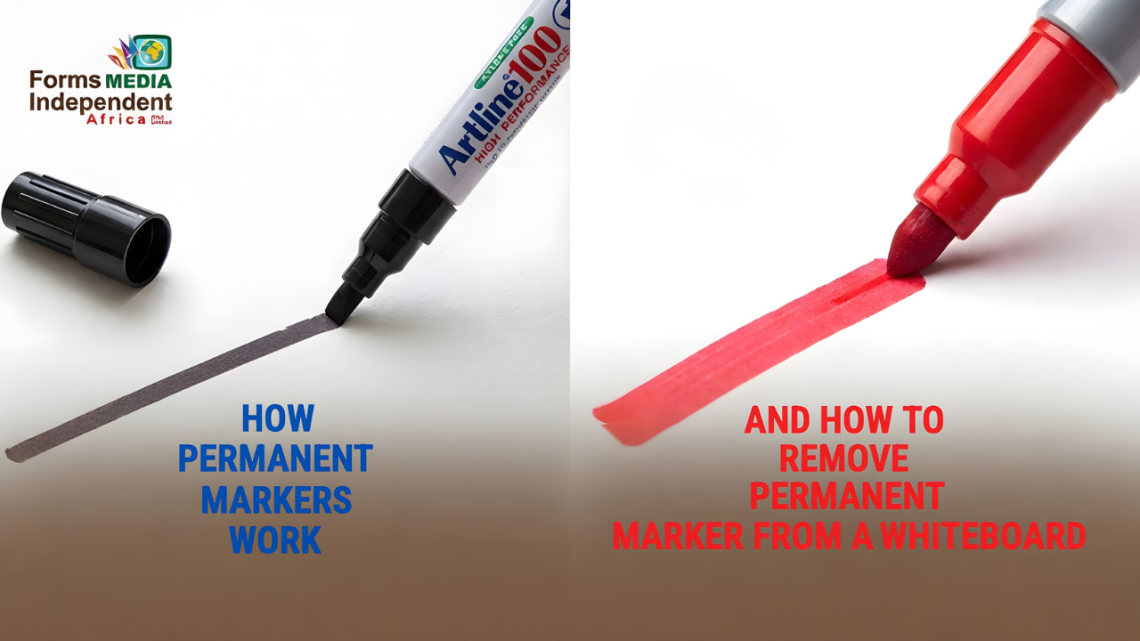
Did you know that over 500 million permanent markers are sold annually worldwide? These ubiquitous tools leave their mark on everything from grocery lists to artistic masterpieces. But have you ever stopped to wonder how permanent markers actually work? It’s a clever blend of chemistry and physics that allows them to create marks that resist water, fading, and smudging. Let’s dive deep into the science behind these indelible writers.
Unpacking the Components of Permanent Marker Ink
At its core, permanent marker ink is a sophisticated mixture designed for durability. It’s not just simple dye; it’s a carefully formulated system. The primary components include:
- Colourant: This is the pigment or dye that gives the marker its colour. Pigments are insoluble particles, while dyes are soluble. For permanent markers, pigments are often preferred for their superior lightfastness and resistance to fading.
- Solvent: This is the liquid carrier that dissolves the colourant and allows it to flow from the felt tip. Common solvents include alcohols like isopropanol or ethanol, and sometimes other organic solvents. The solvent’s evaporation rate is crucial for the marker’s functionality.
- Resin Binder: This is a critical ingredient for permanence. The resin is a polymer that binds the colourant to the surface being marked. Once the solvent evaporates, the resin solidifies, locking the colour in place.
- Additives: Various other chemicals might be included to enhance properties such as flow, drying time, UV resistance, and adhesion to different surfaces.

Understanding these components is the first step to grasping how permanent markers achieve their lasting effect. It is also why brand like Pilot are able to sell ink refill cartridges for their V-Super Color permanent markers.
The Role of the Solvent: Evaporation and Drying
The solvent plays a dual role. Initially, it keeps the ink liquid and allows it to saturate the felt tip and transfer smoothly onto a surface. However, the magic of permanence truly begins as the solvent evaporates. Because the solvents used in permanent markers are volatile, they evaporate relatively quickly upon contact with air.
As the solvent dissipates, the colourant and the resin binder are left behind. This rapid evaporation is what prevents the ink from smudging easily. Unlike water-based inks found in many felt-tip pens, which can be reactivated by moisture, the solvent in permanent markers leaves behind a dry, solid film.
The Resin Binder: The Key to Permanence
The resin binder is arguably the most important ingredient for achieving a permanent mark. Think of it as a microscopic glue. When the solvent evaporates, the resin molecules link together or form a solid film. This film encapsulates the colourant particles, adhering them tightly to the surface.
This resinous layer provides the ink’s resistance to water, smudging, and even some chemicals. The specific type of resin used will influence how well the marker adheres to different materials, such as plastic, metal, glass, or paper. Some resins create a more flexible bond, while others form a very hard, durable coating. For instance, a high-quality permanent marker ink might use acrylic resins for their excellent durability and adhesion properties.
How the Felt Tip Works
The tip of a permanent marker is typically made of porous, fibrous material, often a type of polyester or synthetic felt. This material acts like a wick, drawing ink from the reservoir through capillary action. When you press the tip to a surface, the ink is transferred via this same capillary action.
The structure of the felt tip also plays a role in how the ink is applied. It allows for controlled release of the ink, ensuring a consistent line width and preventing excessive ink flow. Different tip shapes and sizes (fine, medium, broad) are achieved by varying the material and construction of the felt nib.


Surface Interaction: Adhesion and Durability
The permanence of a mark isn’t solely dependent on the ink; the surface it’s applied to is also a significant factor. Permanent marker ink is designed to bond with a wide variety of materials. The resin binder interacts with the microscopic pores and texture of the surface.
On porous surfaces like paper or cardboard, the ink penetrates slightly, and the solvent evaporates, leaving the colourant and resin trapped within the material’s fibers. On non-porous surfaces like plastic or glass, the resin forms a film on the surface, adhering through surface tension and chemical bonding. However, the effectiveness of this bond can vary. For example, permanent markers adhere exceptionally well to polypropylene plastics, a common material in many household items.
Factors Affecting Permanence
Several factors can influence how permanent a mark truly is:
- Surface Type: Smooth, non-porous surfaces are generally harder for inks to adhere to permanently compared to rough, porous materials.
- Environmental Exposure: Prolonged exposure to direct sunlight (UV radiation), extreme temperatures, or harsh chemicals can degrade the ink over time, even for permanent markers.
- Abrasion: Physical rubbing or scratching can eventually wear away the ink layer, especially on less durable surfaces.
- Ink Formulation: Different brands and types of permanent markers use varying ink formulations, leading to differences in their resistance properties. For example, industrial-grade permanent markers often contain more robust resins and pigments for extreme conditions.
Common Misconceptions About Permanent Markers
While they’re called “permanent,” it’s important to note that no marker is truly indelible under all circumstances. They are designed to be highly resistant to removal under normal conditions.
- “Permanent” doesn’t mean “impossible to remove.” With the right solvents (like rubbing alcohol, hand sanitizer, or specialized cleaners), permanent marker ink can often be removed, especially from non-porous surfaces. This is because these solvents can re-dissolve the resin binder.
- Not all permanent markers are equal. Some are designed for specific applications, like writing on fabric or glass, and may have different chemical compositions to ensure better adhesion and durability on those particular materials.
The Chemistry of Removal: Reversing the Process
Removing permanent marker ink often involves using a solvent that can break down the resin binder. Rubbing alcohol (isopropyl alcohol) is a common household item that works effectively on many surfaces because it can dissolve many types of resins. Hand sanitizers, which are primarily alcohol-based, can also be surprisingly effective, as well as going over the permanent marker with a Whiteboard Marker and wiping off (non-porous surfaces only).

Specialised cleaning products designed to remove permanent ink contain stronger solvents that can more aggressively break down the binder, but can also damage the surface written on. The effectiveness of removal also depends on how long the ink has been on the surface and the nature of the surface itself. For example, removing permanent marker from a painted wall requires a different approach than removing it from a whiteboard.
Innovations and Future of Permanent Markers
The technology behind permanent markers continues to evolve. Manufacturers are constantly working on improving:
- Odor Reduction: Many permanent markers have a strong chemical odor due to the solvents. Newer formulations have reduced this.
- Environmental Friendliness: Research is ongoing into using more eco-friendly solvents and binders.
- Enhanced Durability: Developing inks that are even more resistant to fading, water, and extreme conditions for specialized applications.
- Specialty Markers: Markers designed for specific uses, such as food-safe markers for labeling food packaging or industrial markers for harsh environments, are becoming more common. For instance, some food-grade markers utilize edible pigments and binders approved by regulatory bodies like the FDA (U.S. Food & Drug Administration).
Conclusion: A Marvel of Chemical Engineering
Permanent markers are more than just simple writing tools; they are a testament to clever chemical engineering. The careful balance of colourant, solvent, and resin binder, combined with the wicking action of the felt tip, creates a mark that is designed to last. While not truly indestructible, their ability to adhere to diverse surfaces and resist common forms of degradation makes them indispensable in countless aspects of our lives. The next time you pick one up, you can appreciate the science working within that simple-looking pen.
Frequently Asked Questions (FAQs)
The permanence comes from a resin binder in the ink that solidifies and adheres the colourant to the surface after the solvent evaporates. This creates a durable, difficult-to-remove mark.
No, while highly resistant, permanent marker ink can often be removed from non-porous surfaces using solvents like rubbing alcohol. Removal from porous or treated surfaces can be more challenging.
Yes! The easiest way that is whiteboard safe is to go over the permanent marker with a whiteboards marker. The formulation in the Whiteboard Marker is safe fro the whiteboard and will remove the Permanent Marker when you wipe off the Whiteboard Marker
Generally, standard permanent markers are not recommended for direct contact with food. Specialty food-grade markers, which use approved pigments and binders, should be used for such applications.
The strong odor is primarily due to the volatile organic solvents used in the ink formulation. Manufacturers are developing low-odor and odorless versions.
On paper, the ink penetrates the fibers. On plastic, the resin binder forms a film on the surface, adhering through surface tension and chemical bonding, which can sometimes be less robust than bonding with paper fibers.
Washable markers use water-based inks with pigments that don’t bind as strongly to surfaces and can be easily washed away with water. Permanent markers use solvent-based inks with strong resin binders for lasting adhesion.
Expert Insights
“The key to a permanent marker’s success lies in the polymer chemistry of its binder,” explains Dr. Anya Sharma, a materials scientist. “These resins are designed to create a strong, cross-linked network upon solvent evaporation, effectively ‘locking’ the pigment onto almost any substrate.”
According to a report by the Specialty Graphic Imaging Association (SGIA), advancements in pigment technology are also enhancing the lightfastness and durability of inks used in markers, ensuring colours remain vibrant for longer periods, even when exposed to UV light.
👉 For durable labelling solutions and further information on marker applications, visit FMIA.
Further Reading
- The Chemistry of Ink: Explore the broader science behind different types of inks and their applications. Source: ScienceDirect
- Adhesion Science: Learn about the principles governing how materials stick to each other. Source: American Chemical Society
- Polymers in Coatings: Understand the role of resins and polymers in creating protective and decorative layers. Source: Wiley Online Library
- Fibers and Capillary Action: Delve into the physics that enables the ink to flow through the marker tip. Source: Khan Academy